
Technology Description
The wet flue gas desulfurization process is one of the most efficient methods for removing sulfur dioxide (SO₂) from flue gases. The principle is based on the contact of flue gases with a liquid – usually a lime suspension (lime milk) – in an absorber, where a chemical reaction occurs between SO₂ and limestone (CaCO₃). This reaction produces calcium sulfite (CaSO₃), which is further oxidized into stable calcium sulfate (CaSO₄), known as gypsum.
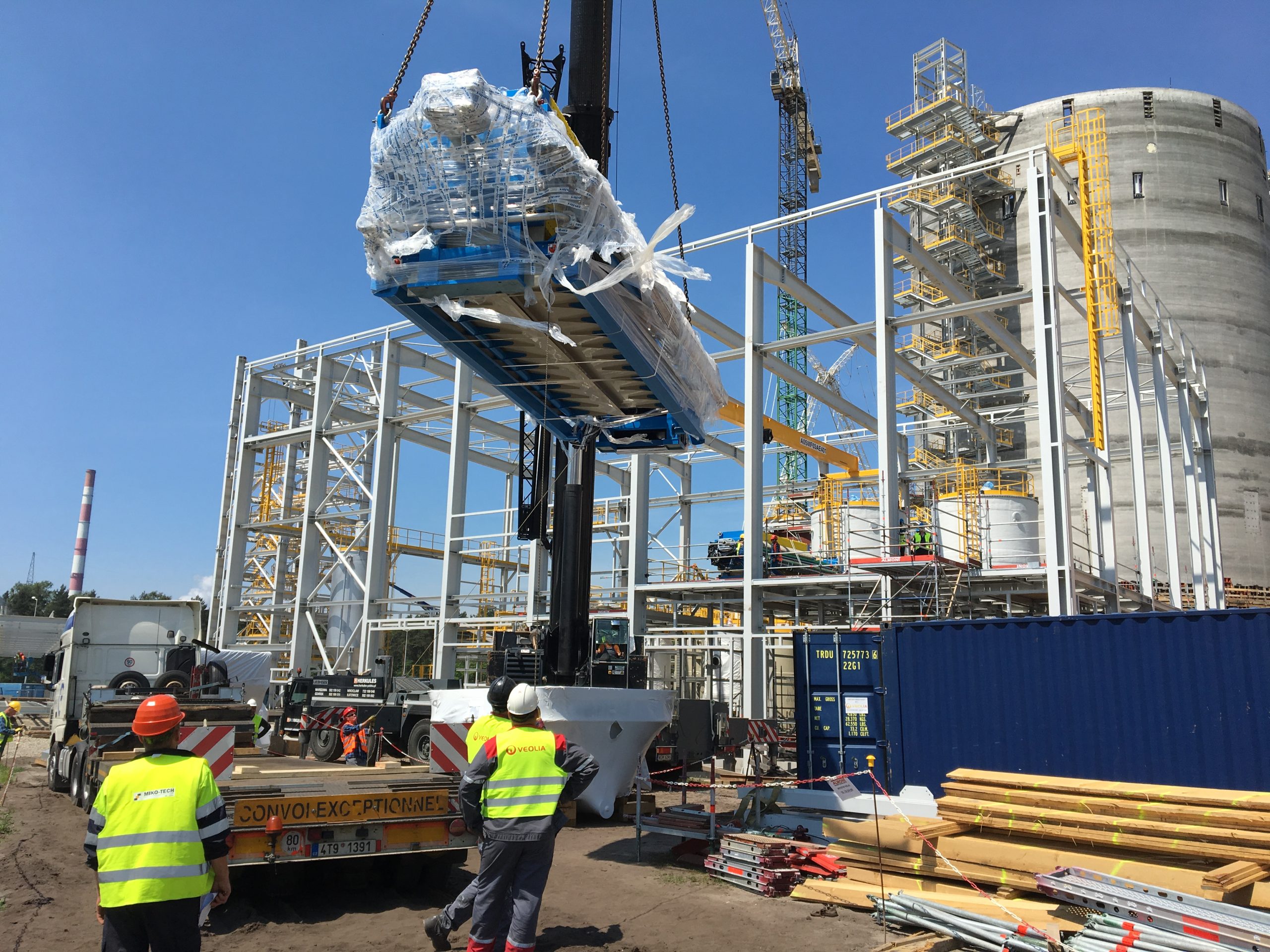
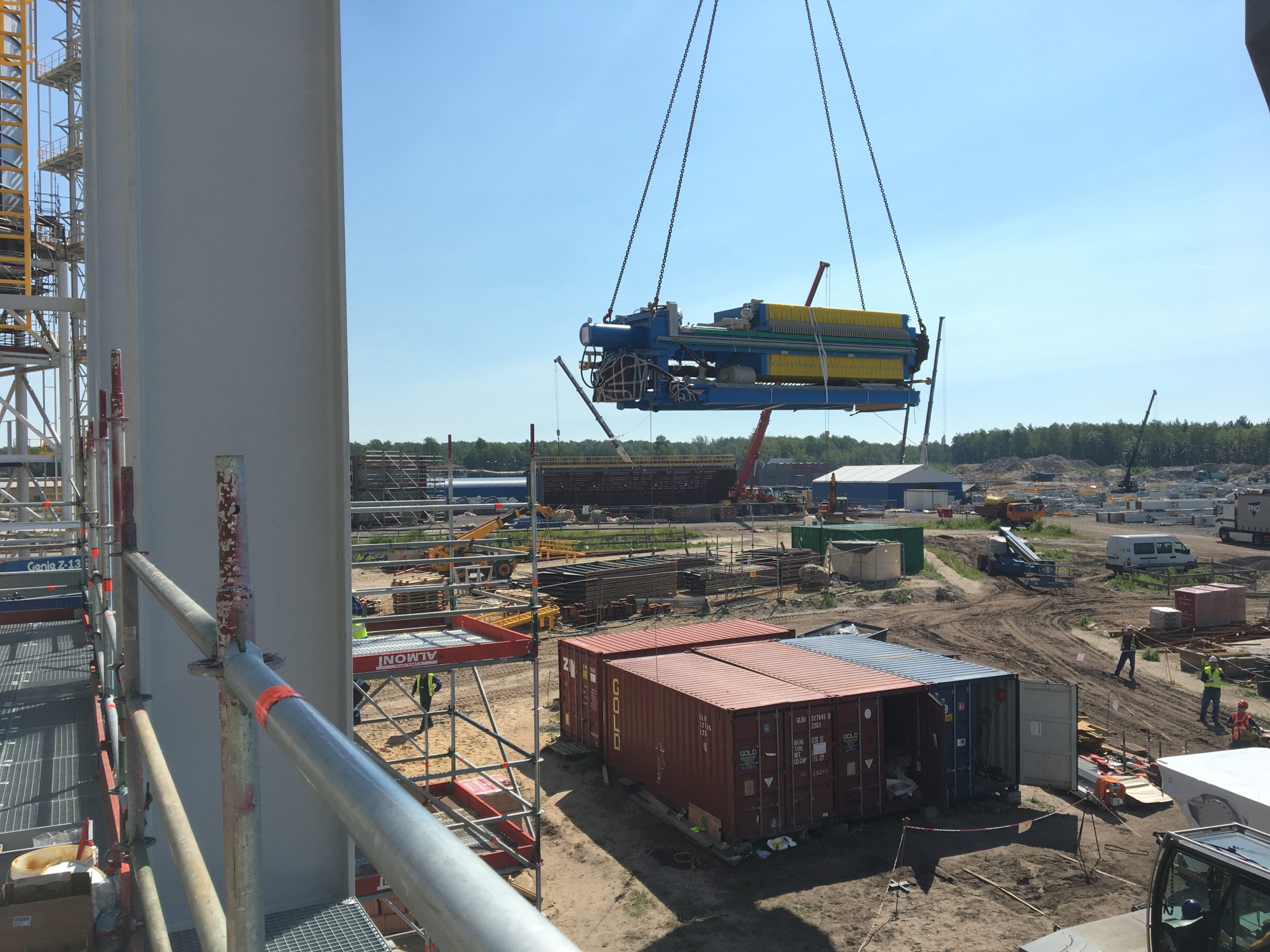
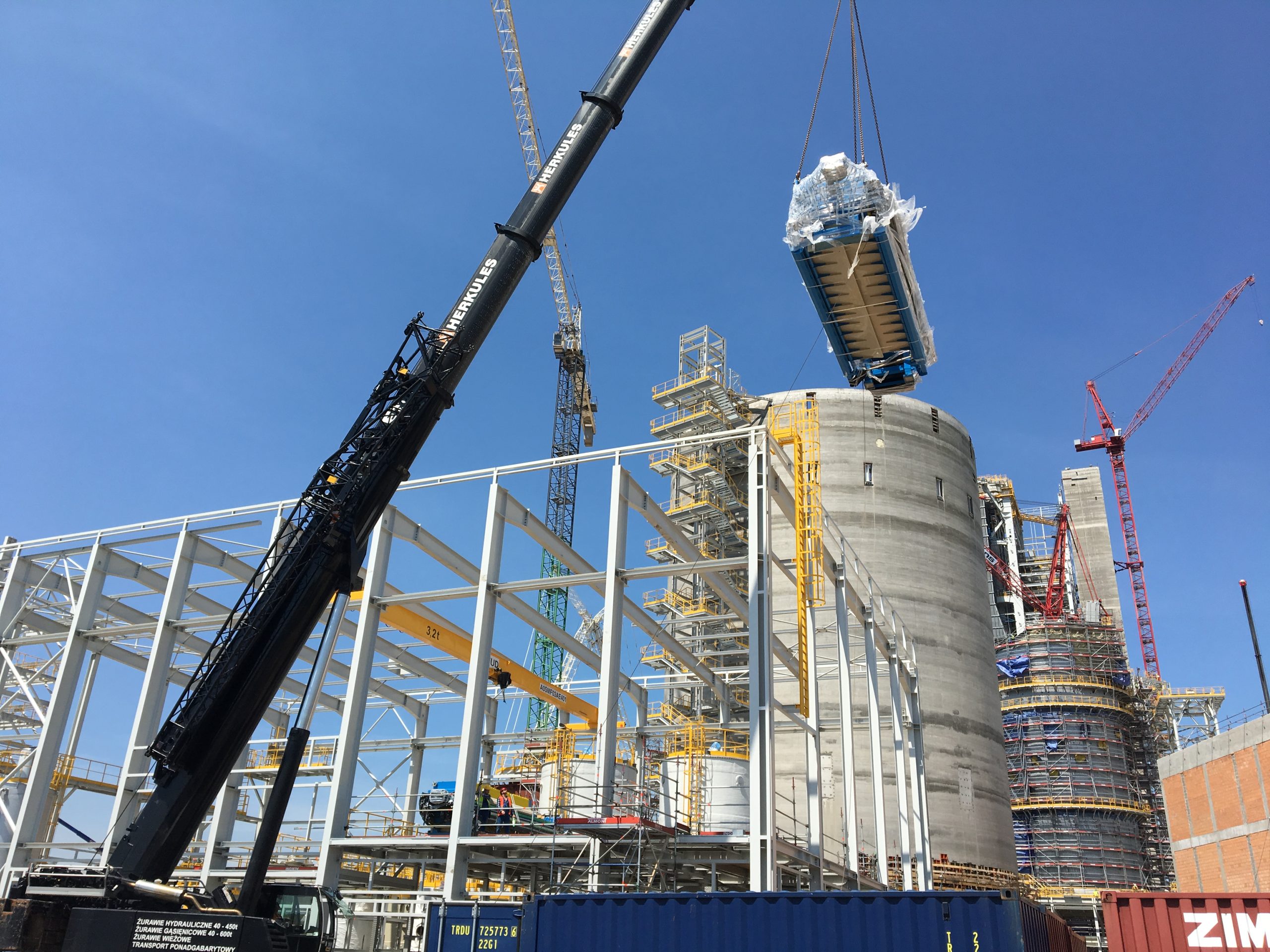
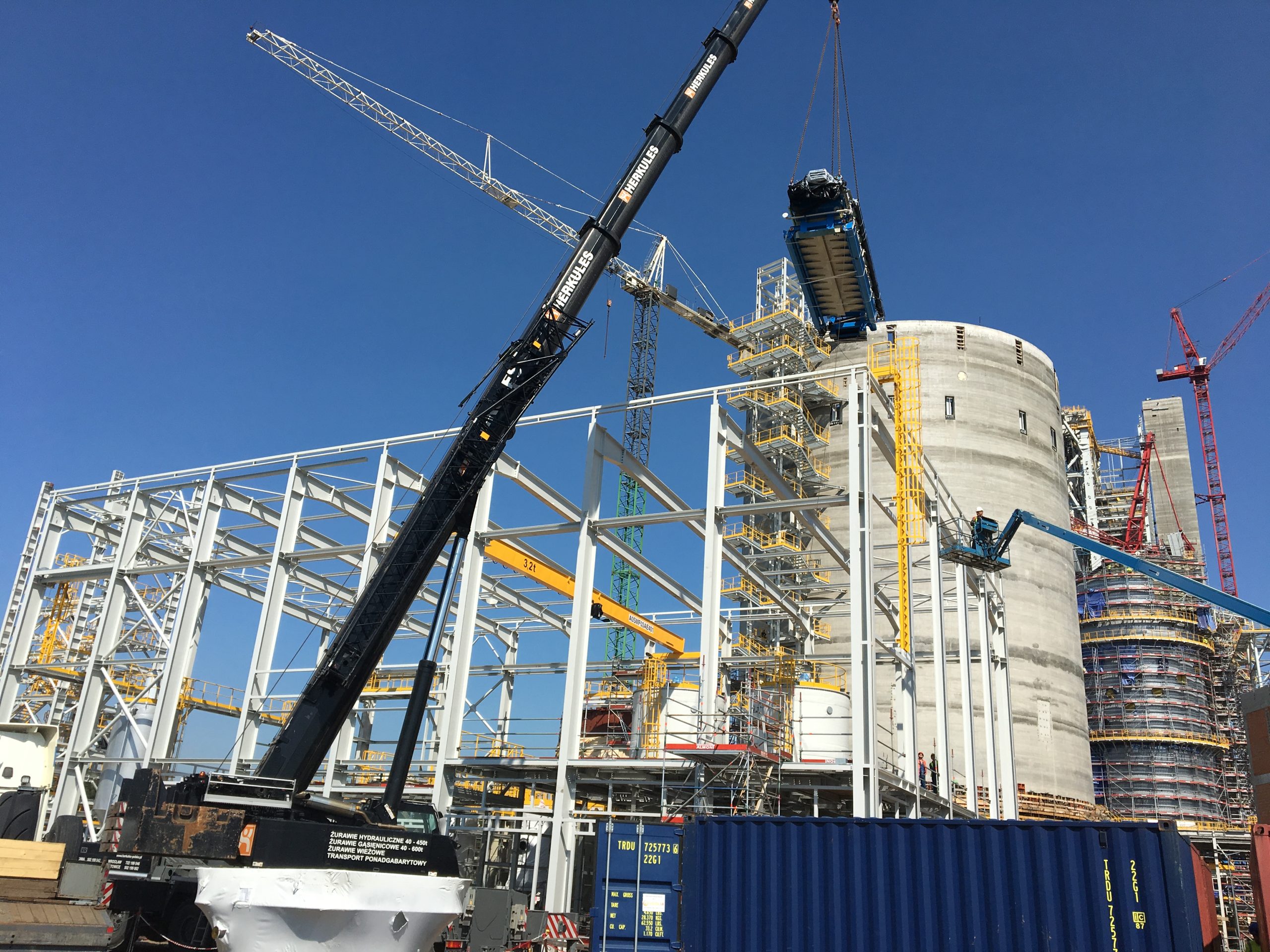
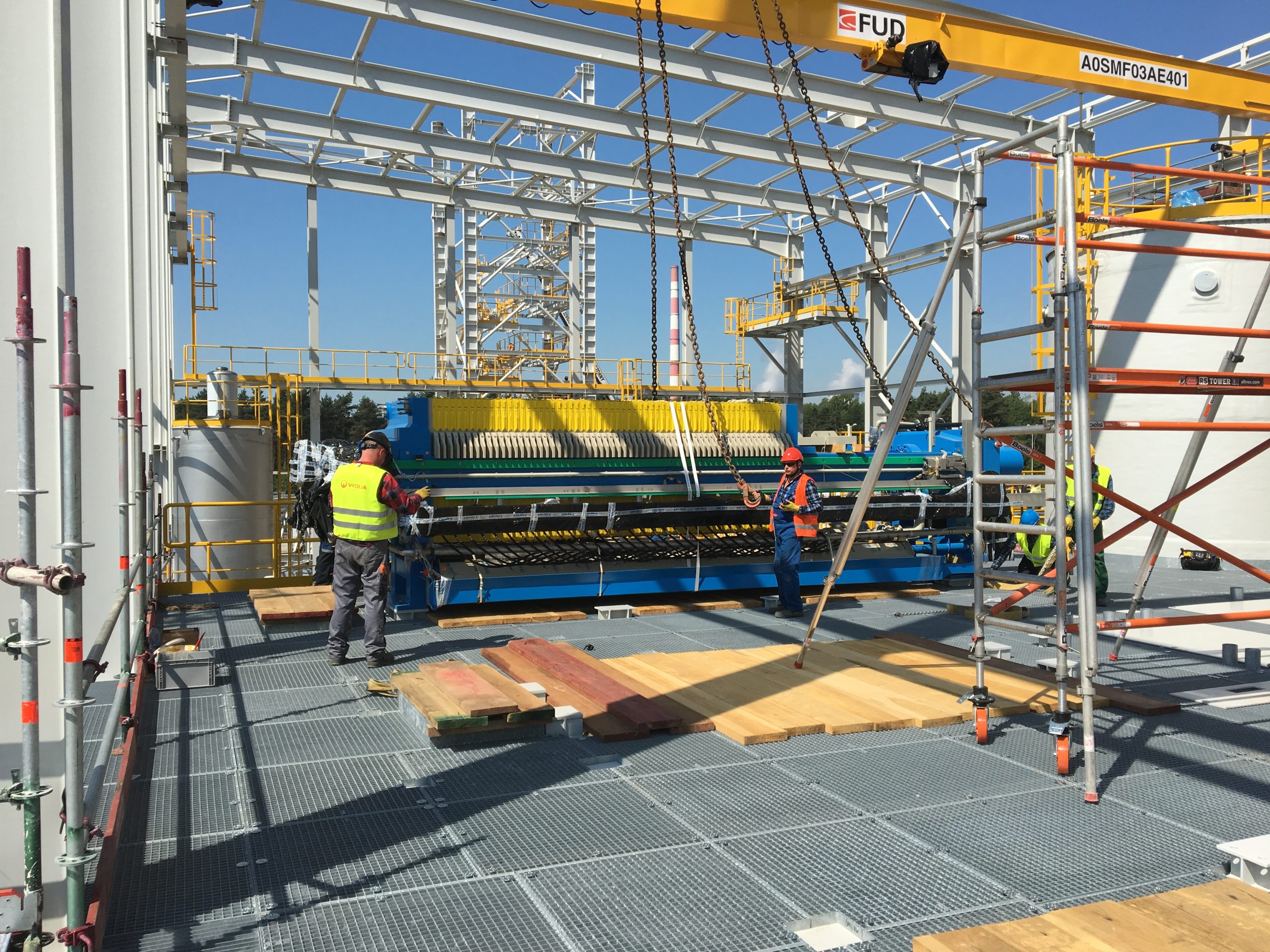
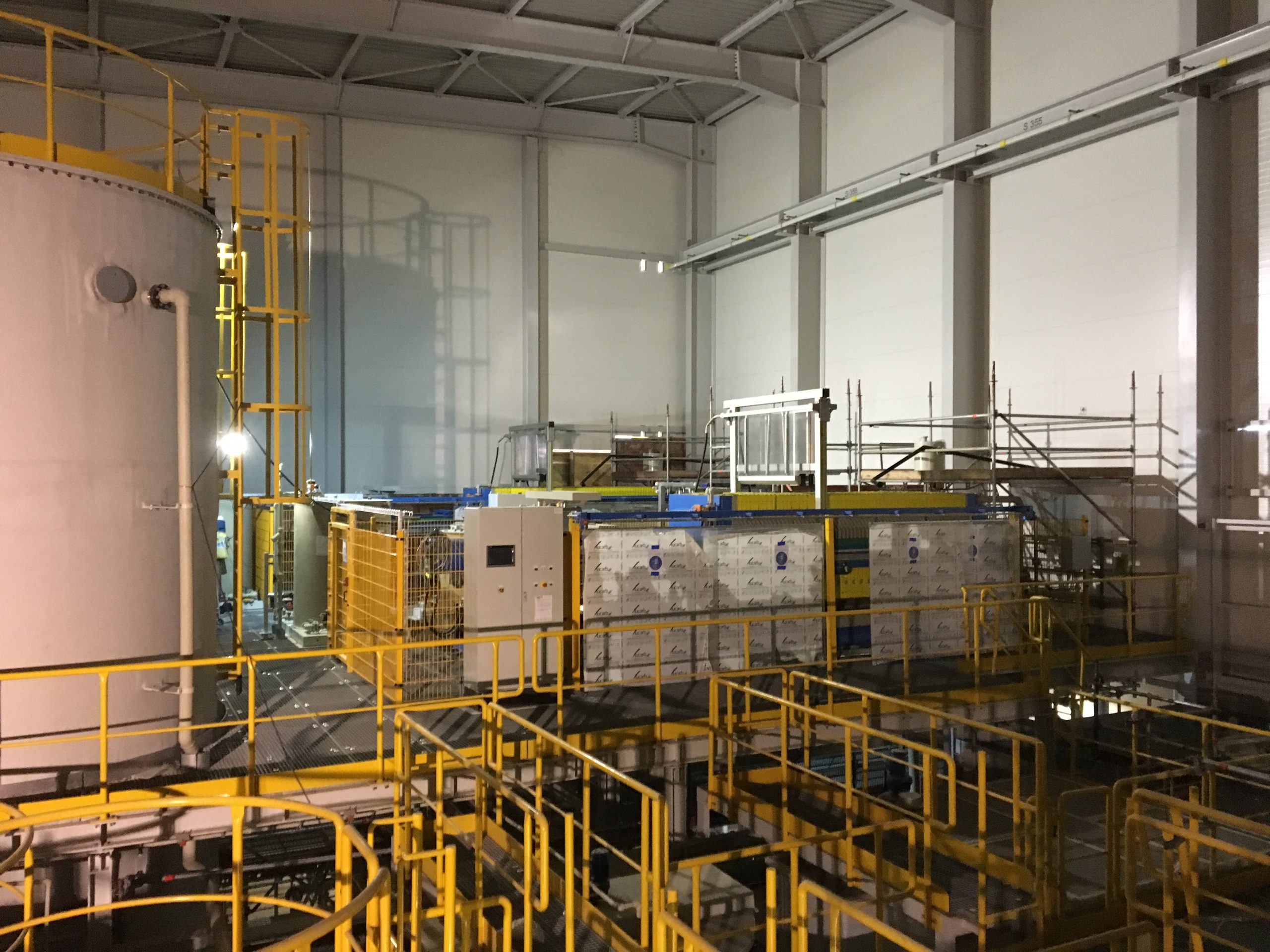
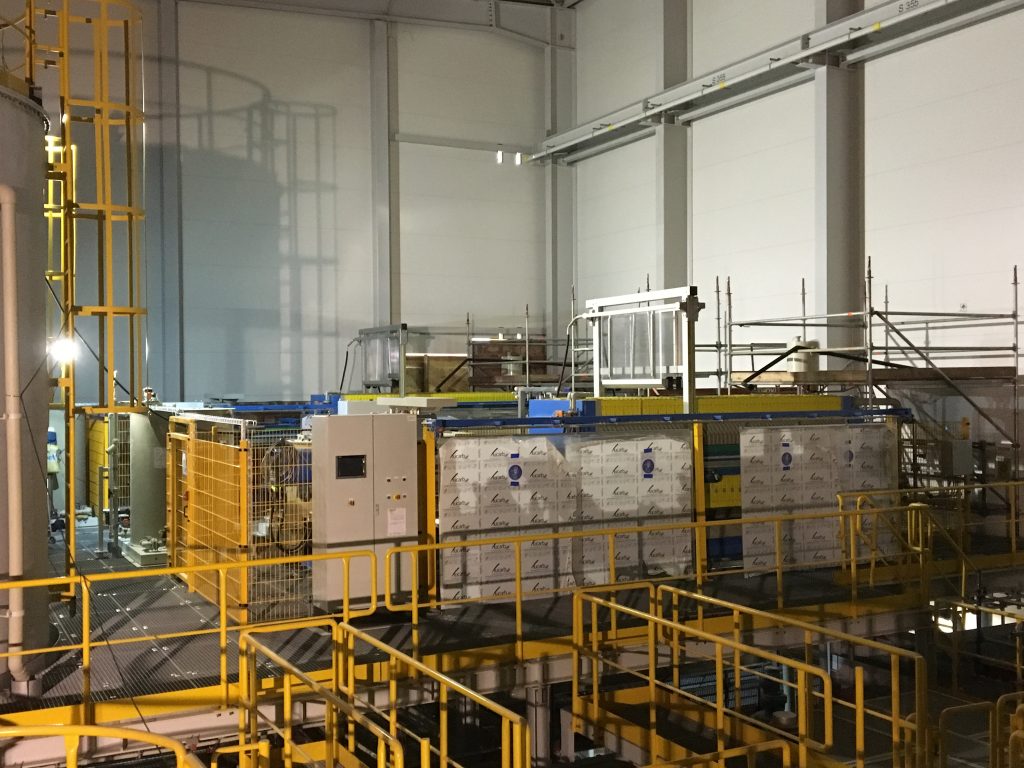
From the absorber, purified flue gases are discharged, and the resulting gypsum-containing sludge is subsequently dewatered using ENVITES chamber-membrane filter presses.
Technological Parameters
| Desulfurization Stage | Sludge Volume | Dry Solids Content | Type of ENVITES Filter Press | Achieved Dry Solids After Dewatering |
| 1st stage | 16 m³/h | 1184 kg/h | 2 × KM1500 | approx. 55 % |
| 2nd stage | 2 m³/h | 53 kg/h | 1 × KM800 | approx. 35 % |
System Operation Principle
- Absorption – Flue gases pass through the absorber, where they are neutralized by the lime suspension.
- Chemical Reaction – Sulfur dioxide reacts with limestone to form calcium sulfite.
- Oxidation – Calcium sulfite is oxidized into calcium sulfate (gypsum).
- Separation – Purified flue gases and gypsum sludge are removed from the process.
- Dewatering – The sludge is pumped to ENVITES chamber-membrane filter presses, where filtration separates the liquid phase and increases the dry solids content.
Results and Benefits
- Stable operation and low operating costs thanks to reliable filtration on ENVITES filter presses
- High dry solids content: up to 55 %
- Further utilization of the product – the resulting gypsum (CaSO₄) can be processed for the production of plasterboards, plasters, or as a setting regulator in cement manufacturing
ENVITES Equipment Used
- 2 × chamber-membrane filter press KM1500 for the 1st desulfurization stage
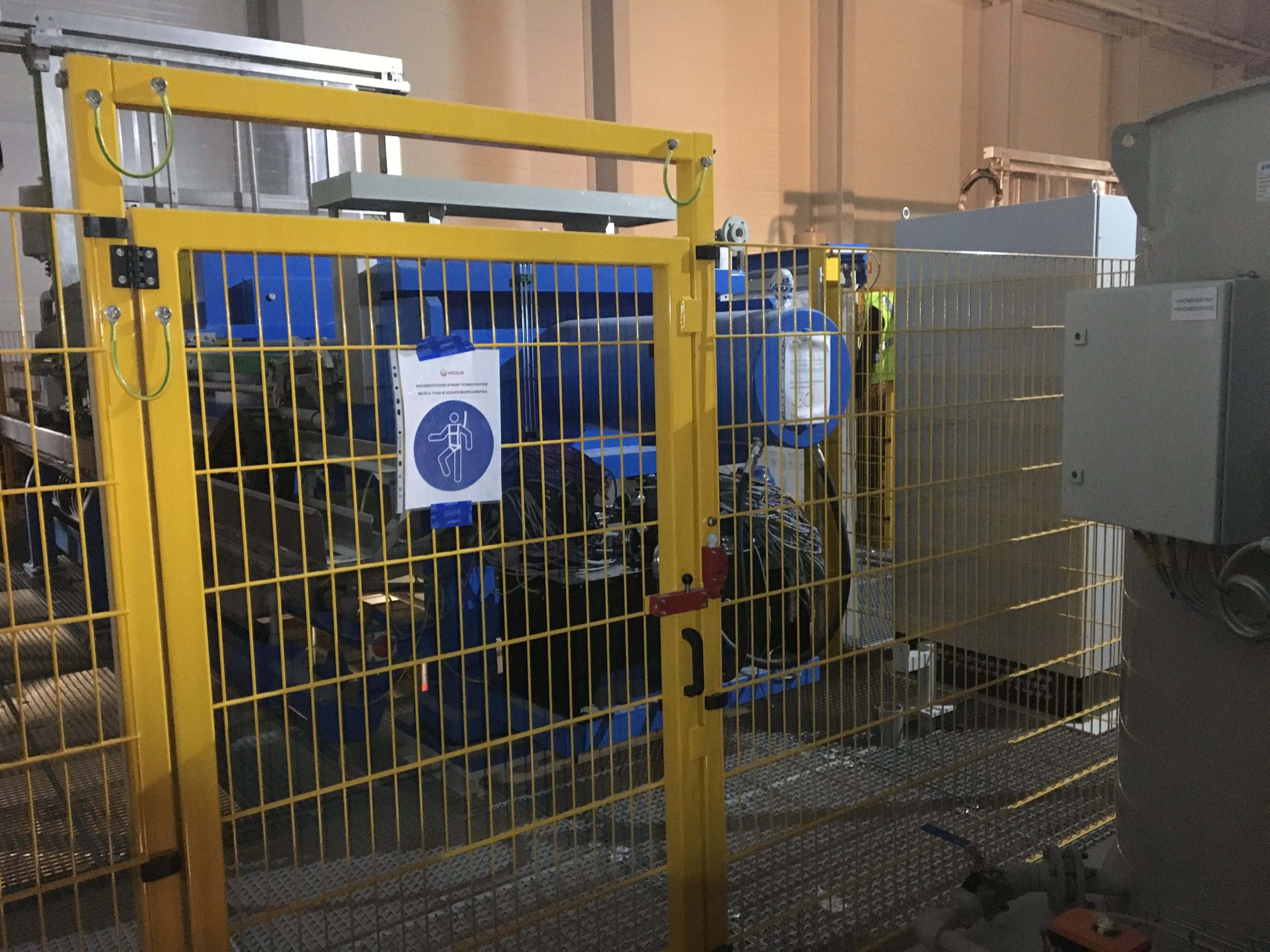
- 1 × chamber-membrane filter press KM800 for the 2nd desulfurization stage
Summary
The installation of ENVITES filter presses provides a reliable solution for sludge dewatering from the wet flue gas desulfurization process. The technology ensures high efficiency, stable operation, and contributes to the environmentally beneficial use of the by-product – gypsum.