
1. Initial Situation – Wastewater from Glass Grinding Processes
The flat glass processing plant involves several production steps that generate wastewater with varying characteristics. The highest water consumption occurs during grinding and polishing, where the cooling circuits of grinding machines become contaminated with glass sludge and abrasives. Other operations (such as drilling, milling, and washing) generate water containing glass particles and residues of lubricants and detergents.
Wastewater volume: 5–20 m³/h from production processes including cutting, grinding, drilling, polishing, and glass washing.
Wastewater characteristics:
The wastewater contains a high concentration of suspended solids (glass particles, abrasives), chemical contaminants (oils, detergents), and metals (copper, lead, zinc). It is unsuitable for direct discharge into the sewer system, and proper treatment is essential to minimize environmental impact.
2. ENVITES’ Technological Solution
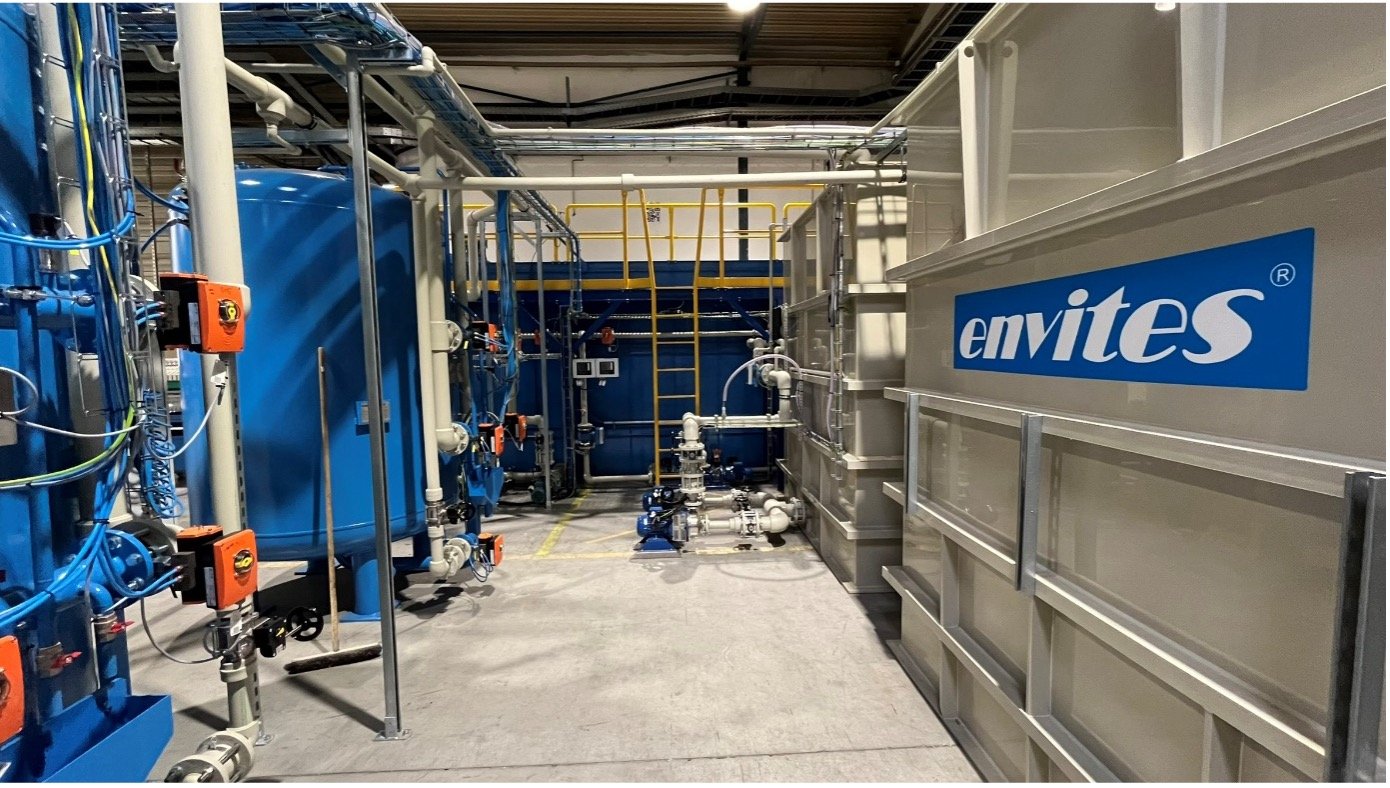
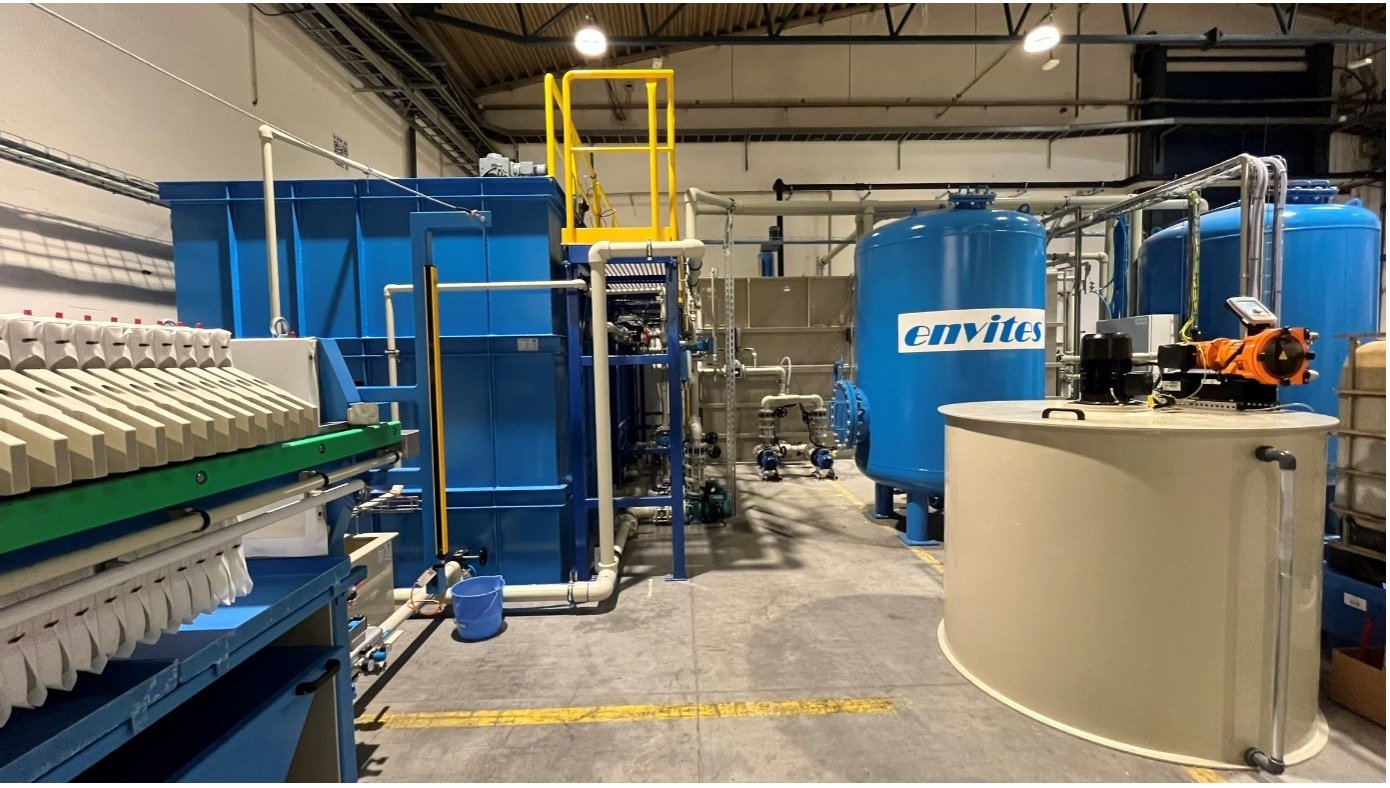
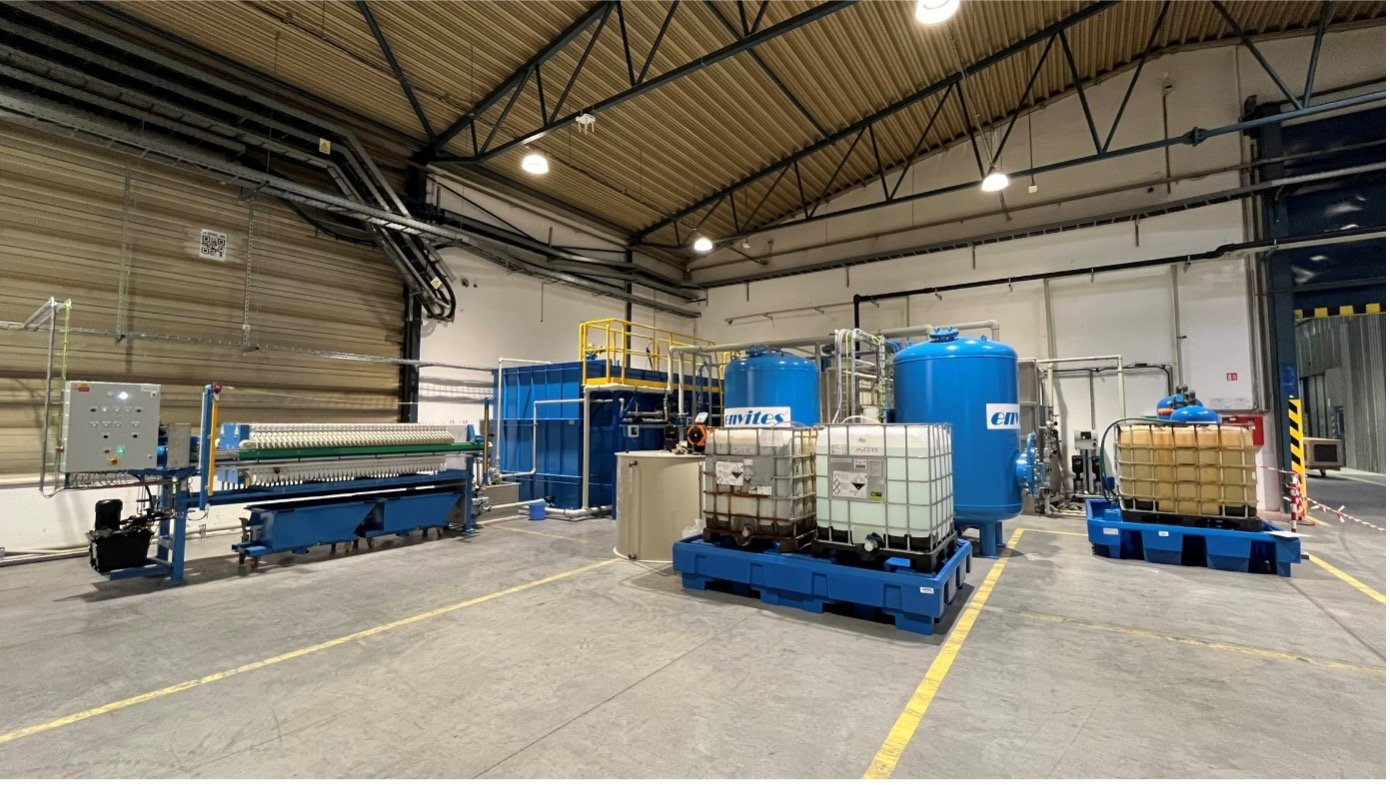
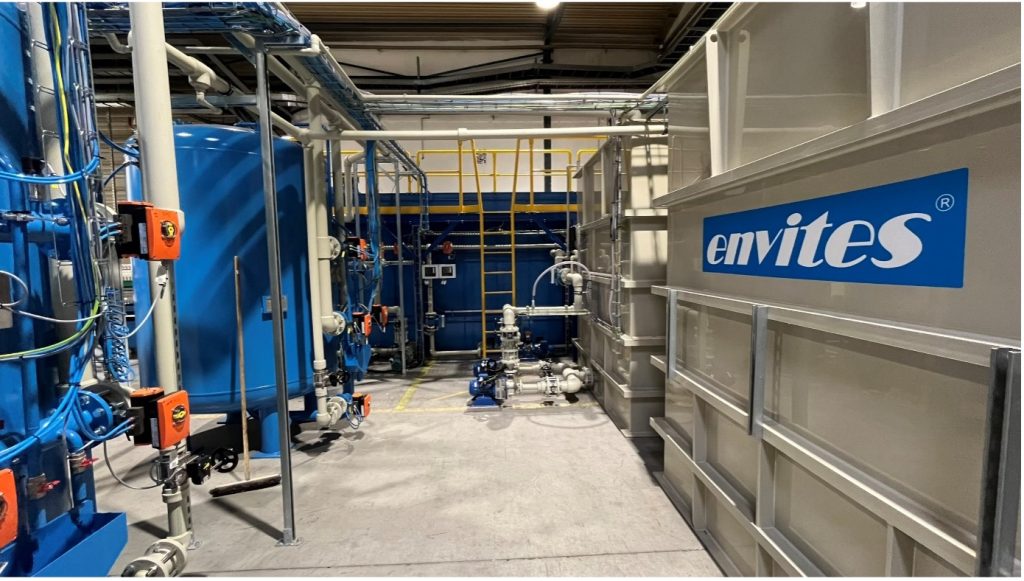
To achieve effective treatment, a combination of mechanical and physico-chemical processes was designed to enable water recycling and pollutant removal:
Settling and Separation Unit:
A process combining coagulation, alkalization, flocculation, sedimentation, and sludge thickening.
Equipment: Coagulation reactor, sedimentation tank with built-in lamella modules for intensified settling.
Output: Reduction of suspended solids and heavy metals by more than 90%.
Sand Filtration:
Function: Removal of fine particles and organic contaminants.
Output: Water suitable for reuse in cooling systems within production.
Sludge Dewatering with Filter Press:
Function: Efficient sludge dewatering, reducing transportation and disposal costs.
Output: Cost savings on sludge handling and the possibility of recycling the filtered water.
3. Results After System Implementation
The implementation of the wastewater treatment plant resulted in:
- Amount of recycled water: 14 m³/h (70% recovery rate)
- Reduction of suspended solids: from 1,000 mg/L to < 100 mg/L
- Lower water and waste disposal costs
- Improved process quality – fewer deposits in cooling systems
- Reduced sludge disposal costs
4. Conclusion
The implementation of the wastewater treatment system has led to a significant reduction in both environmental footprint and operating costs. The designed solution enables efficient water recycling and optimized handling of dewatered sludge.